What is Rope Climbing?
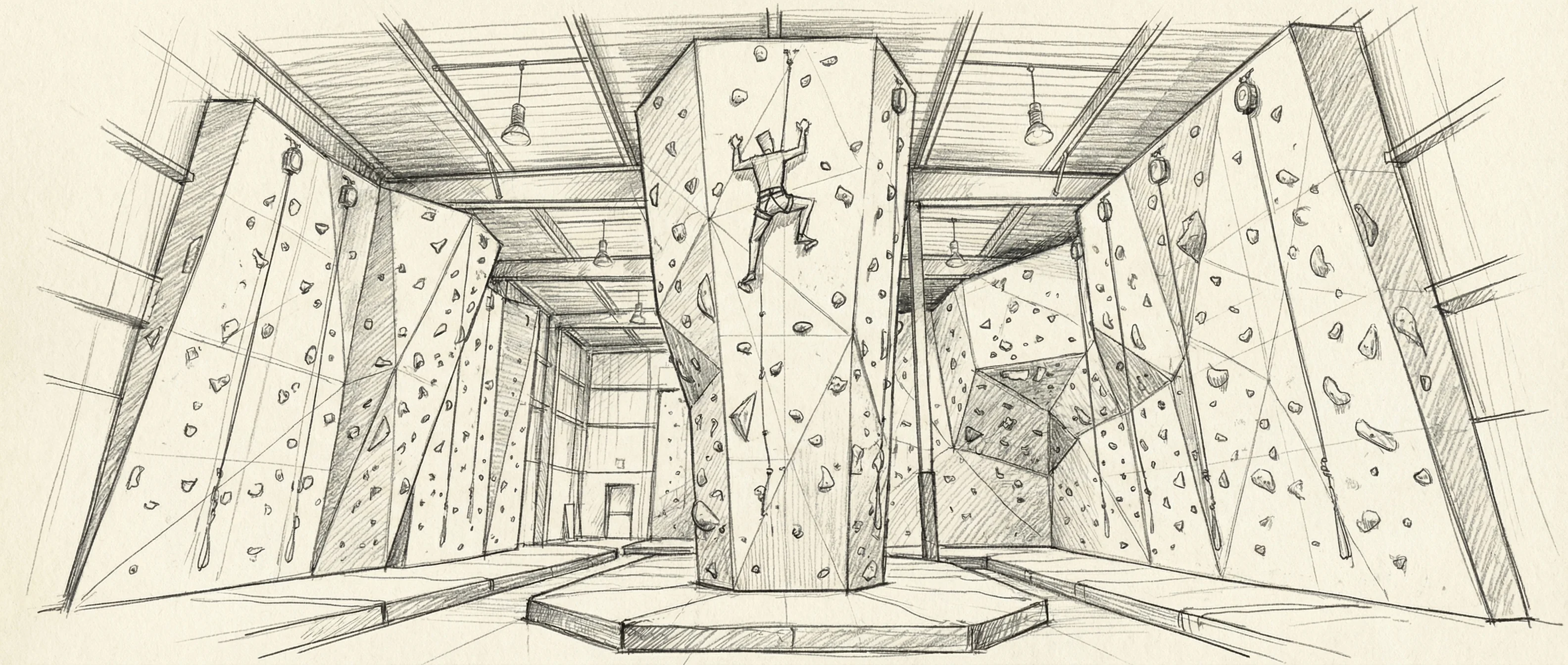
Rope climbing – also known as sport climbing indoors – takes place on artificial walls typically 10 to 20+ meters high. Unlike bouldering, climbers are secured with rope and harness, allowing them to reach significantly greater heights. The two main disciplines are lead climbing (Vorstieg) and top-rope.
In top-rope climbing, the rope runs through an anchor at the top of the wall. The climber is always secured from above, making it ideal for beginners. In lead climbing, the climber clips the rope into quickdraws during the ascent – this requires more experience and a belay certification.
While bouldering focuses on short, powerful sequences at jumping height (up to ~4.5m), rope climbing emphasises endurance, route reading and managing exposure at height. Many climbing halls also have a bouldering area, offering the best of both worlds.
Why Climb in a Hall?
Indoor climbing halls offer ideal conditions for climbers of all levels – from first-timers to experienced sport climbers.
Weather-Independent
Train all year round regardless of rain, cold or heat. Constant indoor climate ensures optimal grip conditions.
Safe Environment
Professional belay systems, certified anchor points and trained staff ensure maximum safety at all times.
Route Variety
From easy beginner routes to overhanging lead climbs – climbing halls offer diverse wall profiles and regularly renewed routes.
Courses & Training
Belay courses, technique workshops and personal coaching help you progress systematically and climb safely.
Community
Meet like-minded climbers, find belay partners and join organised climbing groups or competitions.
Fitness & Health
Rope climbing is a full-body workout training strength, endurance, flexibility and coordination simultaneously.
What to Look for in a Climbing Hall?
Choosing the right climbing hall depends on several important factors.
Wall Height
Walls of 12-15m are standard, while top halls offer 18m+. Taller walls provide longer, more challenging routes and a more authentic outdoor feel.
Number of Routes
A diverse selection of routes across all difficulty grades ensures variety and appropriate challenges for every level.
Belay Systems
Look for auto-belay devices for solo climbing, as well as lead climbing and top-rope areas. Modern halls often provide both options.
Course Offerings
Belay courses, technique training and guided climbing sessions – especially important for beginners and families.
Facilities
Changing rooms, showers, lockers, rental equipment (harness, shoes, belay device) and a comfortable lounge or café.
Kids' Area
Families should look for dedicated children's climbing areas with lower walls, auto-belay systems and age-appropriate routes.
Climbing for Beginners
Rope climbing requires some basic knowledge before you start – but getting into it is easier than you might think.
Important: For lead climbing, a belay course is mandatory. You need to learn proper belaying technique before you can climb with a partner. Most halls offer courses that take 3-4 hours.
The DAV Climbing Certificate
The DAV (German Alpine Club) climbing certificate is the standard qualification for belaying in climbing halls across the DACH region. There are different levels:
- Top-rope certificate: Covers basic belaying on top-rope – the easiest entry point
- Lead climbing certificate: Covers belaying for lead climbers, including dynamic catching
- Cost: Typically 50-100€ for a belay course including certification
Equipment You Need
All equipment can be rented at the climbing hall:
- Climbing harness: Essential for safety – rental typically 3-5€
- Climbing shoes: Provide grip on holds and footwork precision – rental 3-5€
- Belay device: For securing your partner – rental or included with harness
- Chalk: Magnesium for better grip – usually available at the hall
First visit tip: Start with auto-belay top-rope routes if available – no partner or certificate needed. Book a belay course for your second visit to unlock the full climbing experience.
Climbing with Children
Indoor climbing is a fantastic activity for children – combining physical activity, trust-building and adventure.
At What Age Can Children Start?
Most climbing halls offer kids' programmes from around age 5-6. Top-rope climbing with auto-belay is ideal for children – they are secured automatically and can focus entirely on climbing. Many halls also have dedicated kids' walls with lower heights and colourful, themed routes.
Top-Rope for Children
Top-rope climbing is the safest form of rope climbing and therefore ideal for children. The rope is always anchored above, so falls are short and controlled. Many halls offer auto-belay systems where no adult belayer is needed – perfect for younger children.
Kids' Courses
Regular climbing courses teach children technique, safety and build confidence – many halls offer weekly groups for different age ranges.
Birthday Parties
Climbing birthday parties are hugely popular. Halls provide supervised group sessions with instruction, usually for ages 6+.
Safety First
Children should always be supervised. Harnesses must fit properly, and an adult should check all buckles and knots before climbing.
Fun Climbing
Fun climbing venues offer themed walls with automatic belay – ideal for children who want adventure without a formal climbing course.
Safety in the Climbing Hall
Safety is paramount in rope climbing. Following established protocols protects you and your climbing partner.
- Partner check: Always perform a mutual safety check before climbing – harness buckles, knot, belay device, rope path
- Communication: Clear commands between climber and belayer ("Climbing!" – "Climb on!")
- Belay technique: Never take both hands off the brake strand. Stay focused on the climber at all times
- Fall training: Practice controlled falls to build trust in the system and reduce fear
- Rope check: Inspect rope for damage before each session. Report worn equipment immediately
Key Safety Practices
Partner Check
Before every climb: check harness buckles, figure-eight knot, belay device loaded correctly, and rope running freely.
Belay Technique
Learn proper belay technique in a certified course. The brake hand never leaves the rope. Use a modern assisted-braking device.
Fall Training
Practice falls in a safe environment to build confidence. Start with small falls and gradually increase distance.
Hall Rules
Follow the climbing hall's safety regulations, stay clear of fall zones, and report any equipment concerns to staff.
Costs and Prices Overview
Climbing hall prices are generally higher than bouldering halls due to the additional equipment and infrastructure required.
Many halls offer discounted happy hour times, family passes or trial memberships for new customers. DAV (Alpine Club) members often receive reduced rates at affiliated halls.