What is Bouldering?
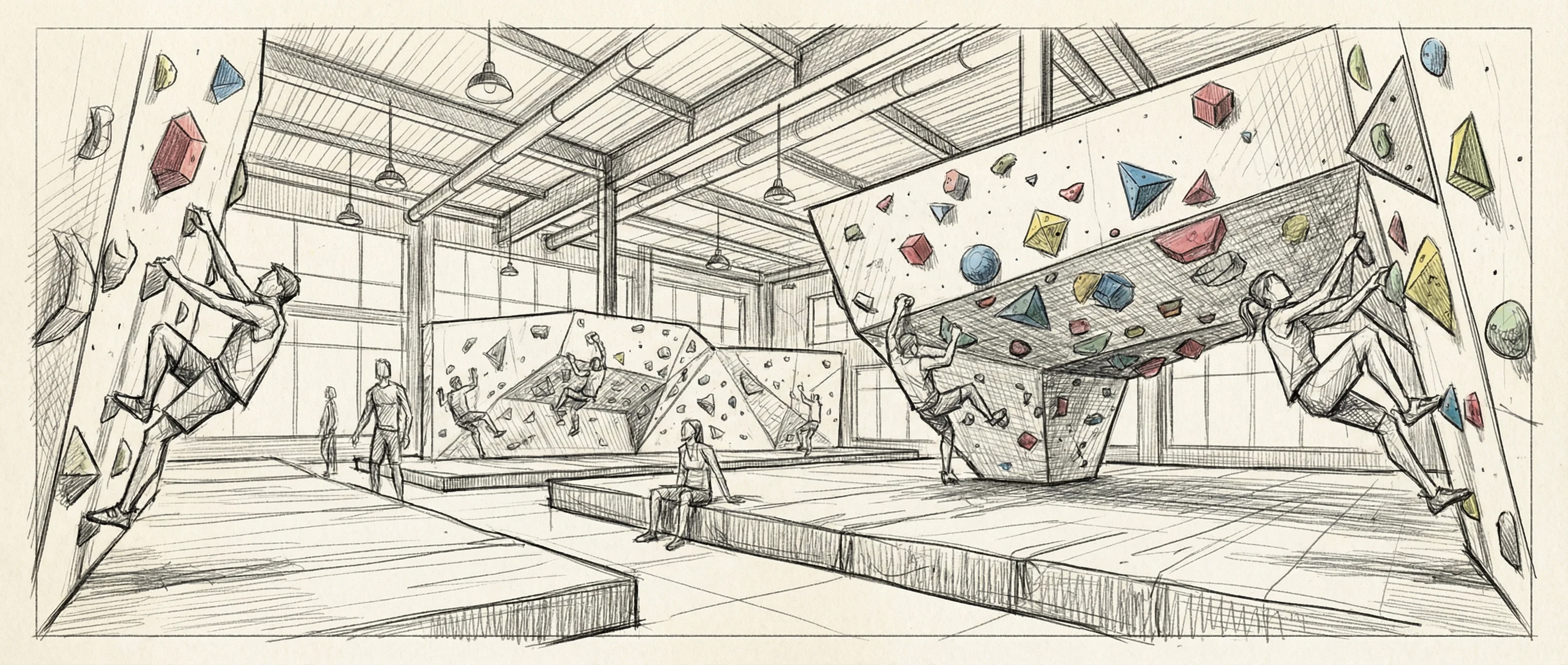
Bouldering is a form of climbing at jumping height – typically up to 4.5 meters maximum. Unlike traditional rope climbing, bouldering requires no safety equipment like ropes, harnesses, or carabiners. Instead, thick crash mats protect against injuries from jumping or falling.
The term "bouldering" derives from the English word "boulder" and originally describes climbing on natural boulders outdoors. In bouldering halls, these natural conditions are recreated with artificial climbing walls and color-coded holds. Each color combination marks a route – called a "problem" in bouldering terminology – with a defined difficulty grade.
Why is Bouldering so Popular?
Bouldering has become one of the fastest-growing sports in recent years. In Germany alone, there are now over 500 bouldering halls – and the number is growing.
Low Barrier to Entry
Unlike rope climbing, you don't need a partner, a course, or expensive equipment. Rent shoes, start climbing – it's that simple.
Full-Body Workout
Bouldering trains strength, endurance, coordination, and flexibility simultaneously. It challenges body and mind.
Flexible & Time-Efficient
A session lasts as long as you want. 30 minutes during lunch break or three hours on the weekend – you set the pace.
Social Component
Bouldering halls are meeting places. The community is open and helpful. Working on problems together creates connections.
Measurable Progress
Difficulty grades make progress visible. Completing a route that seemed impossible last week is incredibly motivating.
Stress Relief
When climbing, you're in the moment. Daily life stays on the ground – focusing only on the next move is meditative.
Since Tokyo 2020, climbing is an Olympic sport – bringing additional attention and professionalism to bouldering worldwide.
What to Look for in a Bouldering Hall?
Various factors play a role when choosing the right bouldering hall for you.
Bouldering Area
Larger halls from 800 m² offer more variety and space. Smaller halls can score with a familiar atmosphere.
Difficulty Grades
A good hall offers routes for all levels – from beginner problems to challenging routes for experienced climbers.
Route Changes
Regularly new set problems keep training interesting. Many halls change routes weekly or monthly.
Facilities
Changing rooms, showers, lockers, and a comfortable lounge area or café increase comfort.
Bouldering for Beginners
Bouldering is the ideal introduction to climbing. You don't need any prior knowledge and can start right away.
The only must: climbing shoes. These can be rented at any bouldering hall for about 3-5€ per visit.
For your first visit, we recommend:
- Comfortable sportswear: Flexible clothing allows full freedom of movement
- Chalk (magnesium): Improves grip – usually available in the hall
- Water: Bouldering is exhausting, stay hydrated
- Time: Plan 1.5-2 hours for your first visit
Start with the easiest routes (usually marked white or green) and work your way up. Most bouldering halls also offer introductory courses for beginners.
Prices Overview
Prices vary by region and hall size. Here's an overview of typical costs.
Many halls offer discounted happy hour times, family passes, or trial memberships for new customers. Comparing is worthwhile!