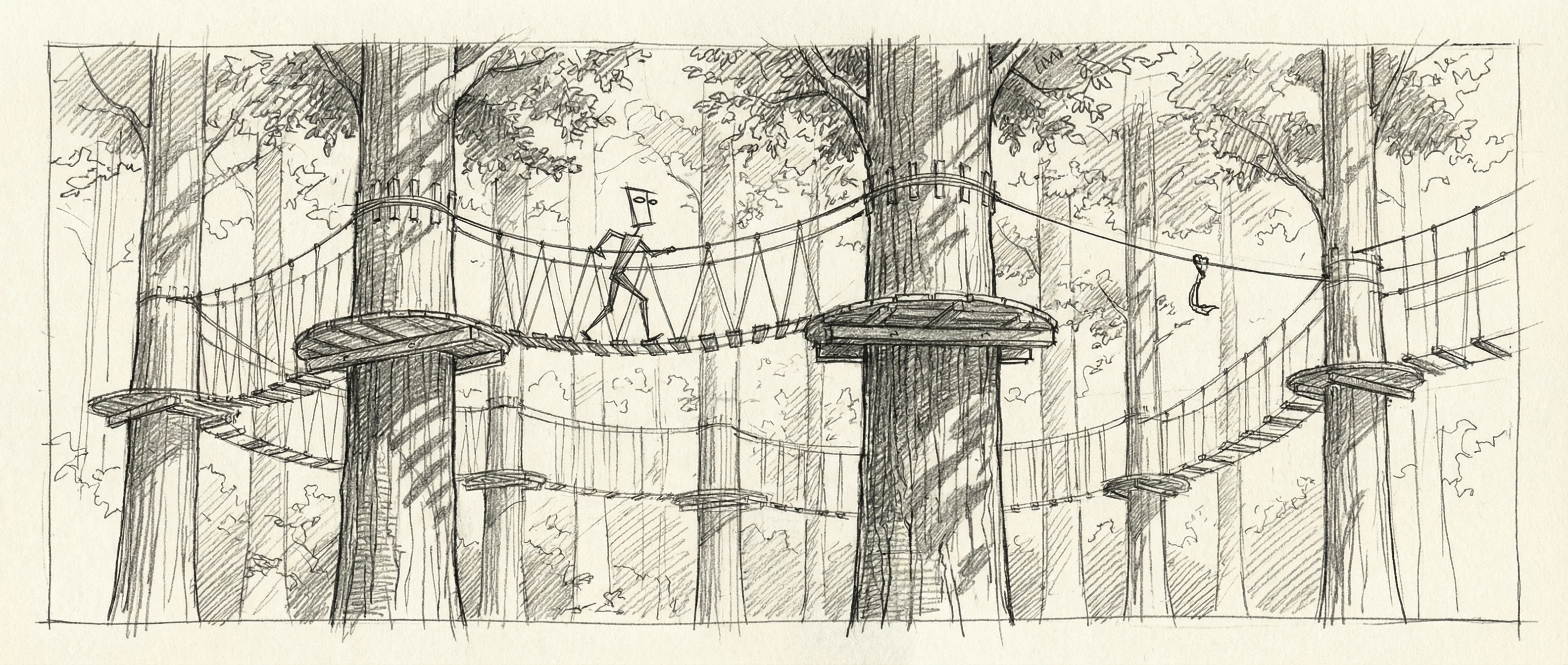
What is a Climbing Forest?
Climbing forests – also known as high rope courses, rope parks or adventure parks – are outdoor facilities where you climb between trees at heights of 3 to 20 meters. Connected by platforms built around tree trunks, the courses feature a variety of challenging elements such as rope bridges, balance beams, Tarzan swings, and zip-lines (Flying Fox).
Unlike indoor climbing halls, climbing forests offer a unique nature experience. You move through real treetops, breathe fresh forest air, and enjoy the surroundings from a bird's-eye perspective. Most climbing forests feature 5 to 15 courses of varying difficulty, so there's something for everyone – from young children to adrenaline-seeking adventurers.
Why Visit a Climbing Forest?
Climbing forests offer a unique combination of outdoor adventure, physical challenge and family fun.
Nature Experience
Immerse yourself in nature and experience the forest from a completely new perspective – high up in the treetops among birdsong and rustling leaves.
Adventure for All Ages
From children's courses at low heights to expert courses with challenging elements – climbing forests cater to every age group and skill level.
Team Building
Perfect for corporate events, school trips and group outings. Overcoming challenges together strengthens team spirit and trust.
Conquering Fear of Heights
Gradually increase the difficulty level and build confidence step by step. Many visitors discover they can achieve more than they thought.
Full-Body Workout
Climbing, balancing, swinging – a visit to a climbing forest trains strength, coordination, balance and endurance all at once.
Family Outing
An unforgettable experience for the whole family. Children and adults climb side by side and share exciting moments together.
Courses & Difficulty Levels
Climbing forests typically offer 5 to 15 courses with increasing difficulty. Here's what you can expect.
Children's / Discovery Course
From age 4-6, low heights (1-3 m). Simple elements like short bridges and small platforms – perfect for the first climbing experience.
Beginner Course
From age 8-10, moderate heights (3-6 m). Rope bridges, balance beams and simple crossings. Good for first-time visitors.
Intermediate Course
Heights of 6-10 m. More demanding elements including swinging logs, rope ladders and longer zip-lines.
Difficult / Athletic Course
Heights of 10-15 m. Physically demanding elements, Tarzan swings and challenging obstacles requiring strength and courage.
Expert Course
Heights up to 20 m. The ultimate challenge with extreme elements – only for experienced climbers with excellent fitness and nerves of steel.
You can freely choose which courses to attempt. Start with the easier ones and work your way up. There's no obligation to complete every course!
Safety in Climbing Forests
Safety is the top priority in every climbing forest. Modern safety systems and mandatory briefings ensure a secure experience.
Safety Systems Explained
Self-Belay System
The classic system: you clip and unclip your two carabiners yourself at each platform. Requires attention but allows maximum freedom of movement.
Continuous Belay System
The modern approach: your carabiner stays on the safety line throughout the entire course and cannot be accidentally unclipped. Increasingly common and especially popular for family parks.
- Mandatory safety briefing before every visit – no exceptions
- Helmets are mandatory throughout the entire park
- Weight limits apply (typically 120-130 kg maximum)
- Never open both carabiners simultaneously (self-belay systems)
- Follow staff instructions at all times
Parks with continuous belay systems are ideal for families with younger children, as the safety line cannot be accidentally disconnected. Look for this feature when booking!
Climbing Forests with Children
Climbing forests are a fantastic outdoor activity for families. Here's what parents need to know.
Age & Height Requirements
- Minimum age: Most parks start from age 4-6 for children's courses
- Minimum height: Typically 1.00-1.10 m for children's courses, 1.30-1.40 m for regular courses
- Accompanying adult: Required for children under 14 (usually 1 adult per 2-3 children)
- Some parks allow children from age 3 on special mini-courses near the ground
Children's Course Features
Low Heights
Children's courses stay at 1-3 meters, so parents can assist from the ground at all times.
Age-Appropriate Elements
Simple bridges, short zip-lines and fun elements designed for small hands and short legs.
Continuous Safety
Most children's courses use continuous belay systems so little ones can't accidentally unhook.
Supervised Areas
Staff are usually present near children's courses for additional support and guidance.
What to Wear
- Sturdy closed shoes: Trainers or hiking boots (no sandals, flip-flops or crocs!)
- Comfortable sportswear: No loose clothing, scarves or dangling jewellery
- Long hair tied back: To prevent tangling with equipment
- Gloves recommended: Available for rent (2-4€) – protects hands from rope burns
Season & Weather Conditions
Most climbing forests are seasonal outdoor operations. Here's when and under what conditions you can visit.
Book in advance! Especially on weekends, holidays and during school holidays, climbing forests can fill up quickly. Online booking is recommended and often comes with a small discount.
- Climbing forests close in thunderstorms, heavy rain and strong winds (typically above 60 km/h)
- Light rain is usually fine – but surfaces become slippery, adding extra challenge
- Check the park's website or call ahead in questionable weather
- Many parks offer rain vouchers or free rebooking
Costs and Prices
Prices vary by park size, number of courses and region. Here's a typical overview.
Many climbing forests offer early bird discounts, birthday packages, school group rates and seasonal promotions. Group bookings of 10+ people often receive significant discounts. Check the individual park's website for current offers!